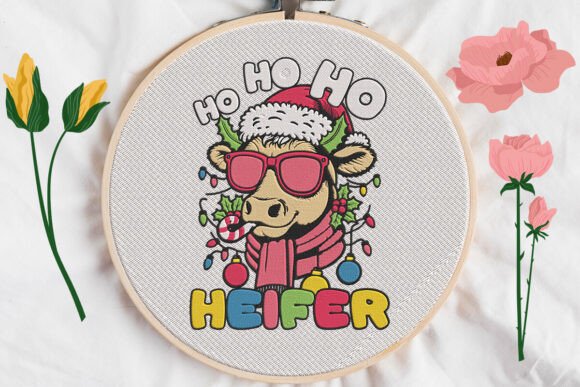
Holiday Merch Review: Ho Ho Ho Heifer Embroidery
As an embroidery designer who has spent years translating digital concepts into tangible brand assets, I approach every new design file with a critical eye. My goal is never just to create something that looks good on a screen, but to produce items that hold up in the real world, withstand frequent washing, and elevate small business merch. Today, I am reviewing the Ho Ho Ho Heifer Embroidery design. This piece is marketed for Christmas-themed t-shirts or pajama sets, positioning itself as a way to spread holiday cheer through clothing. But does it translate effectively to branded patches, staff uniforms, and professional product labels? Let’s break down its commercial viability.
First Impressions and Visual Personality
The title "Ho Ho Ho Heifer" immediately suggests a playful, rustic, and slightly humorous tone. In the crowded market of holiday apparel, humor often drives engagement. From a design perspective, this implies a personality that is friendly and approachable rather than strictly elegant or minimalist. For a small café, a boutique bakery, or a handmade pet brand, this visual language works exceptionally well. It signals warmth and fun, which are key drivers for seasonal purchases.
When evaluating the aesthetic, we must consider how the heifer motif interacts with traditional Christmas elements. If the design balances rustic farm imagery with festive colors, it creates a unique niche. It moves away from generic snowflakes and reindeer, offering customers something distinct. This uniqueness is crucial for brand identity. When a customer sees a tote bag or an apron with this specific design, they associate those values—whimsy, tradition, and handcrafted care—with your business.
Real-World Application for Small Businesses
While the description highlights t-shirts and pajamas, the true value of a versatile embroidery file lies in its adaptability across various merchandise types. Here is how Ho Ho Ho Heifer Embroidery performs in practical business scenarios:
- Embroidered Patches: One of the most profitable applications for this design is creating iron-on or sew-on patches. These can be sold as standalone accessories or attached to denim jackets and beanies. The sturdy nature of embroidery makes it ideal for patches that need to endure wear and tear.
- Staff Uniforms and Aprons: For a local bakery or a holiday pop-up shop, this design adds personality to staff attire. Placing a smaller version on the chest pocket of a white apron or a work shirt creates a cohesive team look that feels personalized rather than corporate.
- Cap Embroidery: A curved cap front is a classic canvas for holiday branding. If the design has a clear focal point, it will sit beautifully on a baseball cap, serving as a subtle yet recognizable logo for your brand during the winter season.
- Tote Bag Design: Canvas totes are staples for craft fairs and Etsy sellers. Embroidering this design onto a natural cotton tote adds a premium feel compared to printed graphics. It suggests durability and quality, encouraging customers to use the bag repeatedly, which acts as mobile advertising for your handmade product.
- Product Packaging Accents: Consider using this design on gift tags, garment bags, or boxes. A small embroidered accent on packaging elevates the unboxing experience, making the customer feel they are receiving a thoughtful, high-quality item.
Strategic Placement and Brand Identity
Using Ho Ho Ho Heifer Embroidery strategically affects more than just aesthetics; it influences customer trust and recognition. Consistency in your design assets helps build a memorable brand. If you use this design across multiple touchpoints—from your website mockups to your physical products—you reinforce your brand’s playful yet professional image.
For instance, if you are a florist launching a holiday collection, pairing this design with greenery motifs can create a cohesive story. If you are a pet brand, the animal-centric theme aligns perfectly with your audience. The key is to ensure that the design complements your existing logo without overpowering it. It should act as a supporting character in your brand’s narrative, adding flavor during the holiday season while maintaining overall visual consistency.
Where to Use With Caution
Not every application is suitable for every design. There are specific constraints designers must respect when working with machine embroidery design files like this one:
- Small Patch Sizes: If you plan to digitize this into a very small patch (under 2 inches), you must ensure the details remain legible. Tiny lettering or intricate outlines may merge together, resulting in a muddy appearance.
- Curved Surfaces: While caps are great, highly curved surfaces can distort the design if not hooped correctly. Always test on the actual garment shape before mass production.
- High Stitch Density: Designs with dense fills can become stiff and uncomfortable on soft fabrics like thin cotton tees. Check the stitch density to ensure the final product remains wearable.
- Dark Uniforms and Fabric Texture: Contrast is king. On dark fabrics, you will need underlay stitches or lighter thread colors to make the design pop. Similarly, textured fabrics like heavy wool or corduroy can hide fine details, so simplify the design placement accordingly.
- Frequent Washing: For items like aprons or work shirts that undergo industrial laundering, ensure the thread colors are colorfast and the stitches are secure to prevent unraveling.
Practical Designer Notes for Production
Before committing to bulk production, every savvy embroiderer should follow these technical steps to ensure quality control:
- Test in Black and White: Convert the design to grayscale first. This helps identify if there is enough contrast between different elements of the embroidery. If the light threads disappear against the background fabric, you have a visibility issue.
- Check Spacing and Hoop Size: Confirm the hoop size requirements early. Ensure the design fits comfortably within your machine’s limits and allows for proper margin around the edges to prevent distortion.
- Use Proper Stabilizer: The choice of stabilizer is critical. For stretchy knit fabrics like t-shirts, use a cut-away stabilizer to prevent puckering. For woven fabrics like tote bags, a tear-away may suffice, but always test on scrap material first.
- Review Thread Color Contrast: Evaluate the thread colors against your target fabric. Holiday reds and greens can sometimes clash if not chosen carefully. Aim for complementary tones that enhance the festive mood without causing visual vibration.
- Create a Printable Mockup: Before stitching, create a printable mockup to show clients or stakeholders. This allows for approval on placement and scale without wasting expensive materials.
- Confirm Commercial Licensing: Most importantly, verify the licensing terms of the digital embroidery file. Ensure you have the right to sell finished goods featuring this design. Unauthorized commercial use can lead to legal issues.
Final Verdict
The Ho Ho Ho Heifer Embroidery design offers a charming and versatile option for businesses looking to capitalize on the holiday season. Its playful nature makes it suitable for a wide range of applications, from custom apparel to branded accessories. By paying attention to technical details like stitch density, fabric choice, and proper stabilization, you can transform this digital file into a high-quality physical product that delights customers.
Remember to check the specific stitch count, file format compatibility, and exact hoop size provided by the creator before beginning production. If these details are not clearly included, reach out to the designer or consult your digitizing software to ensure a smooth workflow. When executed well, this design can significantly boost your commercial embroidery sales, adding a touch of rustic holiday magic to your brand’s offerings.